Fence Companies Melbourne: Setup Timeline From Beginning To End
Getting a fence mounted noises simple till you endure the process. Someday you are gauging blog posts in the sunlight, the next day you are calling the building contractor's distributor since the gate hardware needs to match the specific lock elevation. The timeline changes depending on council regulations, dirt conditions, material choice, and just how hectic local installers are.
If you are hiring fence companies Melbourne, the very best outcome normally comes from comprehending what happens between "we want a fencing" and "it's standing, aligned, and ready to make use of." Below is a reasonable, start-to-finish timeline, including the components that usually surprise homeowners, plus the choices that impact just how quickly the job can move.
The actual timeline begins prior to the quote
Most individuals assume the clock begins when you sign the agreement. In practice, the initial "timeline" starts earlier, because your selections influence whatever that follows.
The fastest setups generally originate from having clear details all set from the first day. That means you understand approximately where the fence requires to rest, whether you are replacing an old fencing or constructing new, and what design you intend to see daily. If you have a dog that needs safe containment, or a kid who utilizes the yard weekly, those needs alter where entrances go and what clearance is acceptable.
If you are replacing an existing fence, additionally keep in mind whether you desire it gotten rid of and transported away. Some installers include demolition and disposal as part of the package, while others treat removal as an add-on. That one decision can change time and cost.
Finally, the paperwork and site coordination matter more than individuals anticipate. A fencing touches boundaries, drain courses, and easements more often than a great deal of brand-new homeowners become aware. The earlier you handle those restrictions, the less you delay later.
Phase 1: Site check out, measurements, and border checks (normally 1 to 2 weeks)
A reputable firm will certainly set up a website check out to validate measurements, examine existing problems, and talk with constraints on the ground. For wood, Colorbond, steel, paling, and many designs, the dimensions have to be exact sufficient for panels and article spacing to line up without uncomfortable cuts.
During this phase, you are also likely to cover:
- Where existing fence lines in fact rest, specifically if the previous fencing was installed by another person long ago
- Whether there are barriers like tree origins, paving, concrete edges, stormwater pits, or yard beds
- How the ground slopes, because sloped websites frequently require step spacing or raked adjustments
- Gate width and swing clearance, which need to take into consideration just how you make use of the driveway and footpath
Boundary checks are the component that can silently add time. Sometimes your fence line matches what you remember, and the work moves quickly. Various other times, the property border is not where you presumed, and you require a lot more input prior to articles can be set.
This is where some fence companies Melbourne attract attention. Solid drivers ask the best inquiries early, after that document the fence line so you do not end up questioning where the blog posts go after materials arrive.
A quick story from the field
I have seen two quotes for the same size of border fence wind up with different message placements because one contractor determined from a fixed factor and best fencing company the other estimated from an aesthetic pen. Neither service provider was being "difficult," yet the 2nd technique created hold-ups, due to the fact that the fencing needed to be revamped as soon as the post line did not match the limit references.
Phase 2: Design verification, product selection, and estimating (regarding 1 to 3 weeks)
Once the site see is done, you typically receive a quote that secures the fence type, height, post spacing, ground approach, and entrance configuration. This is also the stage where you verify colours, finishes, and any unique features.
Colorbond or powder-coated steel fence tends to be quicker in the planning stage due to the fact that the elements are standardised. Timber and custom-made designs can take much longer because the timber grade, therapy, and board widths need to be confirmed.
The quote should spell out what is included. Take note of the information, since the "setup timeline" is simply the visible component of the job. The behind the curtain job is scheduling, buying, and collaborating trades.
Ask on your own what you are really purchasing:
- Are footings included, and what kind of footing is planned?
- Is the fencing being set up directly to the ground or on stepped areas for slope?
- Will the gate be mounted with matching equipment and proper latching alignment?
- Is there a clear prepare for demolition if an old fence is removed?
If the quote is vague about these, expect more conversation later, which can include days or weeks.
Phase 3: Authorizations and neighbor control (can be 2 to 8 weeks, often longer)
This stage is the variable most home owners take too lightly. Also when you are certain regarding your fence placement, the process can need added checks depending upon the city, fence height, and boundary specifics.
Neighbour coordination can be simple when the substitute lines up with an existing certified fence line. It ends up being slower when the brand-new fence calls for modifications, or when the neighbors have worries concerning height, personal privacy screening, view lines, or building and construction timing.
If your job requires authorizations, the approval process can be fast in many cases and reduce in others. Hold-ups can originate from awaiting paperwork, re-submissions due to a kind mistake, or councillor evaluation cycles.
A sensible way to handle this is to validate what is called for as early as feasible. A strong fence company Melbourne operations need to inform you what they take care of and what you require to provide.
Edge situation: easements and services
Even if the fence is "only" a boundary fence, you may have drain easements, stormwater lines, or energy solutions near the placement. Blog post holes, excavation, and ground deepness need to make up those assets. This is one factor expert installers do not just dig where the line looks clear. They prepare around the below ground realities.
If your website has actually known solution runs, it might lengthen preparation, since extra checks or adjustments might be required.
Phase 4: Products purchased and organizing confirmed (usually 1 to 6 weeks)
Materials lead times are commonly the largest swing factor after approvals. Steel and Colorbond elements can be stood up by manufacturer timetables, shipping, and seasonal demand. Hardwood supply can likewise differ depending on board dimensions and therapy batches.
During this stage, an excellent installer will certainly lock in the installation date or at least give a home window. Some companies can arrange rapidly if they have item available. Others will book the crew around the distribution date.
This is where the timeline can extend without anyone doing "anything incorrect." It is just an issue of supply matching the crew's calendar.
If you are functioning to a specific deadline, like an upcoming move-in date or an institution holiday when trades can access the website, inform your installer early. It might change whether the firm begins with demolition first, after that mounts, or whether they series job around distribution arrivals.
Phase 5: Preparation and site arrangement (generally 1 to 3 days)
Once every little thing is ready, you will certainly see task on site. The prep phase consists of:
- Setting out the fencing line so posts match the concurred alignment
- Checking levels and mark heights so the top rail looks consistent
- Confirming gate placements and making sure eviction swing path is clear
- Protecting plants and areas you care about, specifically near maintaining edges and paved access
If there is existing fencing to get rid of, this might take place in preparation. Some installers do elimination the day before footing starts, which keeps energy and minimizes downtime. Others favor removal earlier if there is a lot of dismantling or if disposal requires a separate booking.
A note on landscaping and surfaces
If you have developed yards or current landscape design, you may wish to go over protective steps. Article digging and concrete jobs can damage sides, sprinkler heads, and soil beds. A quick walk-through while the crew gets on site can prevent those small problems that become longer delays.
Phase 6: Grounds and message installation (commonly 1 to 2 days, plus curing time)
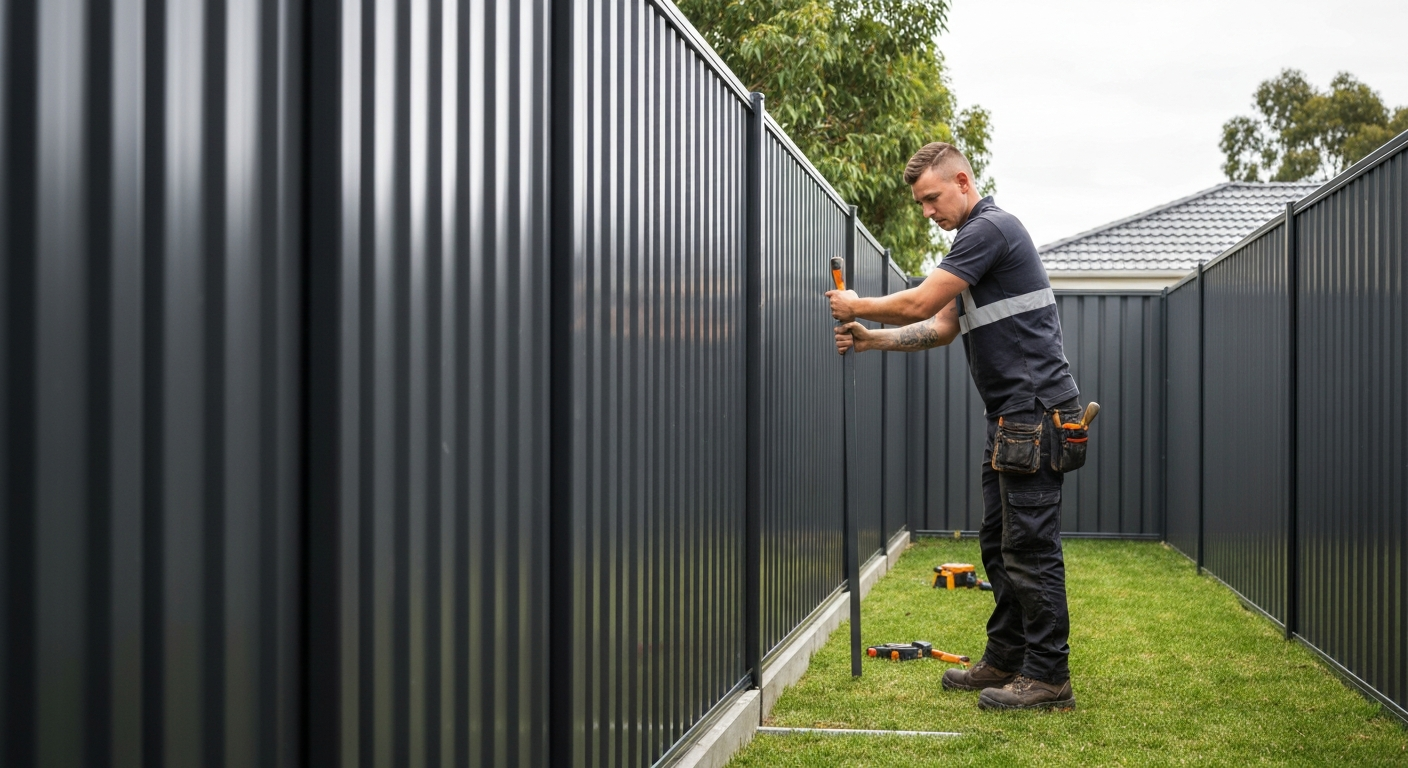
This stage is where the fencing becomes architectural. Articles are set, straightened, and safeguarded with the proper ground technique for the soil and fence type.
In numerous rural Melbourne contexts, the most common strategies include excavating openings and establishing messages with concrete. The specific mix, deepness, and footing design can rely on the ground conditions, fence elevation, and whether there is hefty wind exposure.
Why this stage occasionally takes longer than expected
Even when the excavating and setting fast, the fence crew may require to stop briefly after setting articles to make certain the concrete cures appropriately. If they hurry, the fence can move, and positioning problems can appear later when rails and infill are attached.
In practical terms, you may see a staff do the article installation in a day or more, after that wait on a curing window prior to rail and panel work. Some business set up the job so the whole setup takes place in one continuous block. Others divide it based upon curing demands and team availability.
If you are preparing around weather condition, this issues. Rainfall can slow down healing and affect excavation quality.
Phase 7: Rails, infill, and panel setting up (usually 1 to 3 days)
Once posts are set and steady, the remainder of the fencing goes in. For steel fences, rails are repaired and panels are affixed. For timber, pickets are spaced, dealt with, and checked for uniformity throughout sections.
This phase tends to relocate quickly due to the fact that the difficult positioning job has currently occurred with the messages. Still, it is not "instantaneous," particularly on bigger sizes or when you have numerous entrances, edges, or uneven ground.
Gates are a grandfather clause. They require careful positioning so the lock satisfies the strike plate properly and the gate does not scuff. If eviction equipment gets here later, or if eviction frame needs changes after suitable, it can local top fencing contractor add time.
Corners, inclines, and backyard obstacles
Corners and slopes are where craftsmanship shows. A fence can look right from ten meters away but irregular on close inspection if article spacing and rail levels are not handled properly. Installers typically take time here to see to it the fence "checks out" right aesthetically, not just mathematically.
If your building has a driveway incline, a side return with limited clearances, or developed paving edges, you could see additional cutting and fitting. That is normal, and it is commonly much better to allow the installer make the effort currently than approve hurried job that requires rectification later.
Phase 8: Ending up touches, clean-up, and handover (typically half a day to 2 days)
Even if the major installation surfaces rapidly, there is always a wrap-up period. This consists of:
- Checking measurements once again for the gate and any type of lock alignment
- Tightening installations and re-checking leading line and picket spacing
- Tidying the site, removing offcuts and remaining materials
- Confirming the final fence elevation and look with you on site
With wood, extra actions might include discolor or therapy (depending upon item and whether the lumber is pre-treated). With steel or Colorbond, the "ending up" is typically concerning equipment alignment, touch-ups, and making certain safety coatings are intact.
An excellent installer will additionally discuss upkeep fundamentals. Timber fencings typically need regular assessment and therapy to keep the look even and safeguard the wood integrity. Steel fencings may require cleaning and look for any type of scraped coatings.
A sensible end-to-end timeline (what you can plan around)
Every work varies, but homeowners usually want a useful sight of timing. If you are considering the procedure like a schedule you can prepare your life around, here is a useful framework.
- Site browse through and measurements
- Quote settled and product confirmed
- Approvals or neighbour control (if required)
- Materials delivery and staff reservation
- Installation, then finishing and handover
Across a regular fencing upgrade on a straightforward block, you might see a duration around 4 to 10 weeks from first contact to completion. If authorizations or neighbor sychronisation comes to be involved, it can extend to 8 to 14 weeks, often more.
This is why "timeline assurance" is seldom possible without understanding the website constraints. Yet you can still decrease unpredictability by moving with each stage emphatically, particularly on boundary alignment and product selection.
How to maintain the timeline moving (without micromanaging)
Most delays are not dramatic. They are small keeps in communication or choices taken far too late. If you desire the project to progress smoothly, maintain your actions quick when the installer requests options or confirmations.
Here are one of the most reliable behaviors, from what I have seen job reliably:
- Confirm the fence design and colour early, prior to products are ordered
- Decide on elimination and disposal at the exact same time as you choose the new fence
- Provide access details, vehicle parking setups, and contact availability for the days professions will certainly be on site
- Review the fencing line set-out and gate positions as quickly as the installer notes them, not days later
- Ask concerning curing time and sequencing so you understand when the fence is "complete" versus "structurally all set"
You do not require to hover, yet being present for essential checkpoints can protect against weeks of rework.
What can slow down setup down (and just how to prepare)
It is not just approvals and materials. Some typical problems include time, even when everything is reserved properly.
Soil is a large one. Rocky ground or unsteady dirt can require deeper footing or additional care throughout excavation. If the site is soaked, holes can collapse, which indicates added time for re-digging or re-planning footing depth.
Another regular problem is imbalance with existing features. If a fence satisfies a keeping wall surface, a driveway side, a side entrance, or a garden bed, the option typically needs instant reasoning. That can be quick if the staff is prepared, and slower if they find the "real" problem throughout excavation instead of during the initial measurement visit.
Finally, gateways can develop delays if you are not sure of the opening you in fact require. A gate that looks right on paper can be troublesome in real usage. As an example, if you park a ute or make use of a wheelbarrow, you may want a broader entrance or a various swing instructions. Those decisions ought to be locked prior to construction and ordering.
Questions to ask your fencing firm Melbourne prior to job starts
A friendly, professional business will happily answer useful inquiries. If you ask early, you avoid surprises later.
Consider asking these five inquiries, because they map directly to time and top quality:
- How long does shipment typically take for my fence type and colour?
- What is included in the setup extent, especially demolition and disposal?
- How do you handle boundary placement, and will certainly you reveal me the set-out prior to you dig?
- What is your expected job series, do you complete in one continual block or split the job?
- What upkeep need to I plan for, based on the fence material and Melbourne climate exposure?
If the responses are clear, specific, and based in your website details, you are taking care of the right kind of operator.
What "done" appears like when the crew leaves
One of the hardest parts of any type of build is not understanding what to inspect at the end. You want the fencing to look excellent, but you additionally require it to be properly mounted so it remains good.
When you do the final walk-through, focus on positioning along the line of view, whether entrances open and close efficiently without dragging, and whether the top line and spacing correspond. Seek spaces that were not intended, check that dealings with are uniform, and make certain the fence does not wobble.
If there is an issue, elevate it before the installer packs up. Repairs are typically quick on the day the team is still on site. Solutions a week later can require rescheduling.
A great fencing business Melbourne method is to treat the handover like a high quality review, not simply a final sweep of the driveway.
Seasonal timing in Melbourne: does it matter?
Season impacts drying and treating, and Melbourne climate can be unforeseeable. In general terms, if you are scheduling around hefty rainfall or winter months problems, treating times can really feel longer, and set-out and excavation can come to be messy.
That does not suggest fencings can not be set up in any period. It indicates you could see slightly even more cushioning in the schedule, specifically for footings and any type of treatments that call for completely dry conditions.
If you can choose a begin date, plan for weather condition home windows and ask your installer just how they generally set up treating in your particular backyard conditions.
An example "day in the life" of a fencing job
To make the timeline feel actual, think of a moderately intricate job on a basic Melbourne block.
The installer comes for set-out and begins the article dig. They confirm gateway positioning and check degrees, after that location messages. By the end of the first day, you can currently "see" the fencing line arising. Day 2 is usually about getting the articles to a totally established, secure phase, then starting rails and infill where the routine permits. If the healing routine requires even more time, rail setup may be pressed to the next day or more. Then panels enter rapidly, and gateways are fitted carefully.
You might see the full fence looking full in a number of working days, however the architectural milestones and final alignment checks still matter. That is the difference in between a fencing that looks good today and one that remains true through the next summer season wind season.
Bringing all of it together
A fence setup timeline is not just a sequence of jobs. It is the overlap of decision-making, purchasing, access control, approvals, and on-site judgement.
If you desire the process to run efficiently, deal with the early steps as part of the install, not something different. Verify your boundary considerations and gateway requires early, choose materials with delivery time in mind, and keep an eye on set-out and alignment when the staff marks the line.
When those items click, fence companies Melbourne can commonly supply a complete fencing within a functional window like 4 to 10 weeks on simple websites. When authorizations, neighbor control, or limit issues show up, plan closer to 8 to 14 weeks, and stay adaptable around climate and treating realities.
If you are intending your fence, the most effective question to ask is not only "When will you begin?" but "What will establish the coating day for my details residential or commercial property?" That one concern typically causes a clearer schedule, less shocks, and a fence you more than happy with for years.